Overview
Our Women’s Health & Pelvic Interventions service provides comprehensive, minimally invasive solutions for a variety of pelvic and gynecologic conditions. Using advanced image-guided techniques(including ultrasound, CT, and fluoroscopy)our team delivers precise diagnosis and targeted treatment with exceptional accuracy.
We manage conditions such as pelvic pain, uterine fibroids, pelvic venous congestion, ovarian cysts, and other complex pelvic disorders. These procedures are performed through tiny needle-sized access points, avoiding the need for traditional surgery. Patients benefit from reduced pain, shorter recovery times, and faster return to daily activities.
With a patient-centered approach and the latest interventional technologies, we offer safe, effective, and modern treatment options designed to improve comfort, health, and quality of life for women at every stage.
Advantages
- Minimally Invasive Treatments: Procedures like uterine artery embolization and image-guided ablation reduce the need for open surgery.
- Quick Recovery: Most patients can resume work within 1–3 days.
- Effective Symptom Relief: Treatments reduce heavy bleeding, pelvic pain, urinary issues, and improve fertility outcomes
- High Success Rate: Procedures such as RFA/MWA have success rates over 85% for fibroid treatment.
- Preserves Uterus and Fertility: Many women achieve successful pregnancies post-treatment with minimal impact on ovarian reserve.
- Short Hospital Stay: Most procedures are outpatient or require only a brief hospital stay.
Treatments
Uterine Fibroid Embolization
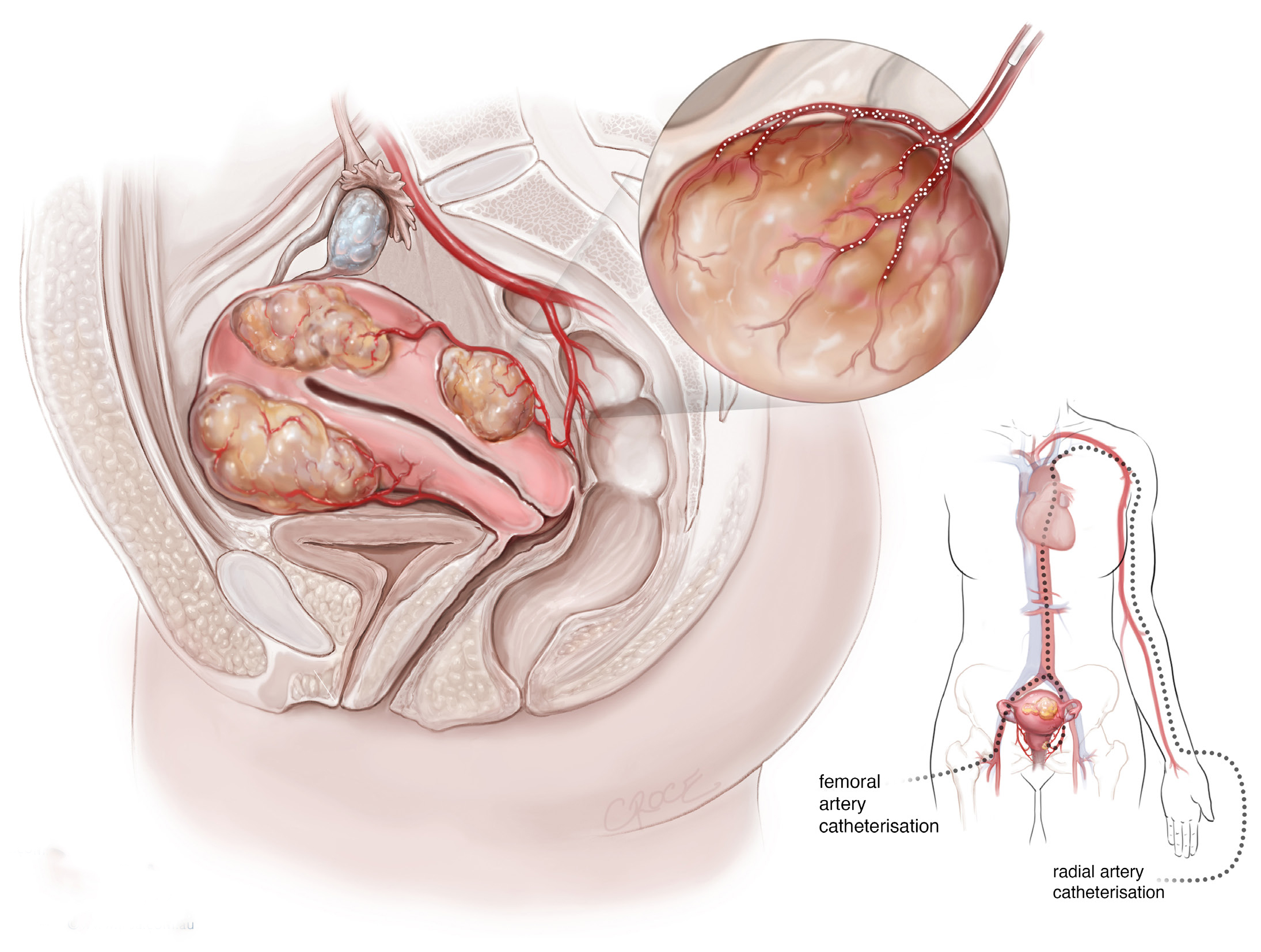
Uterine Fibroids are benign (non-cancerous) growths in the uterus which may lead to various symptoms including heavy and painful periods, going to the toilet frequently, pelvic pressure, or infertility. Uterine artery embolisation, also known as uterine fibroid embolisation, is a procedure that involves blocking the blood vessels to the fibroid which causes the fibroid to shrink and reduces any symptoms it may be causing. This avoids having to have your uterus removed. The procedure is performed by an interventional radiologist, rather than a surgeon and is an alternative to having surgery.
Fibroids are common and most do not require treatment. However, if your fibroids are large or your symptoms are not improving with less invasive treatments, your GP will discuss more invasive treatment options with you. If surgery is an option, you gynaecologist will discuss whether you are suitable. In most women, UAE is also an option and this will be discussed with you by an interventional radiologist. UAE is non-surgical and does not remove the fibroids. Rather, the treatment causes them to shrink.
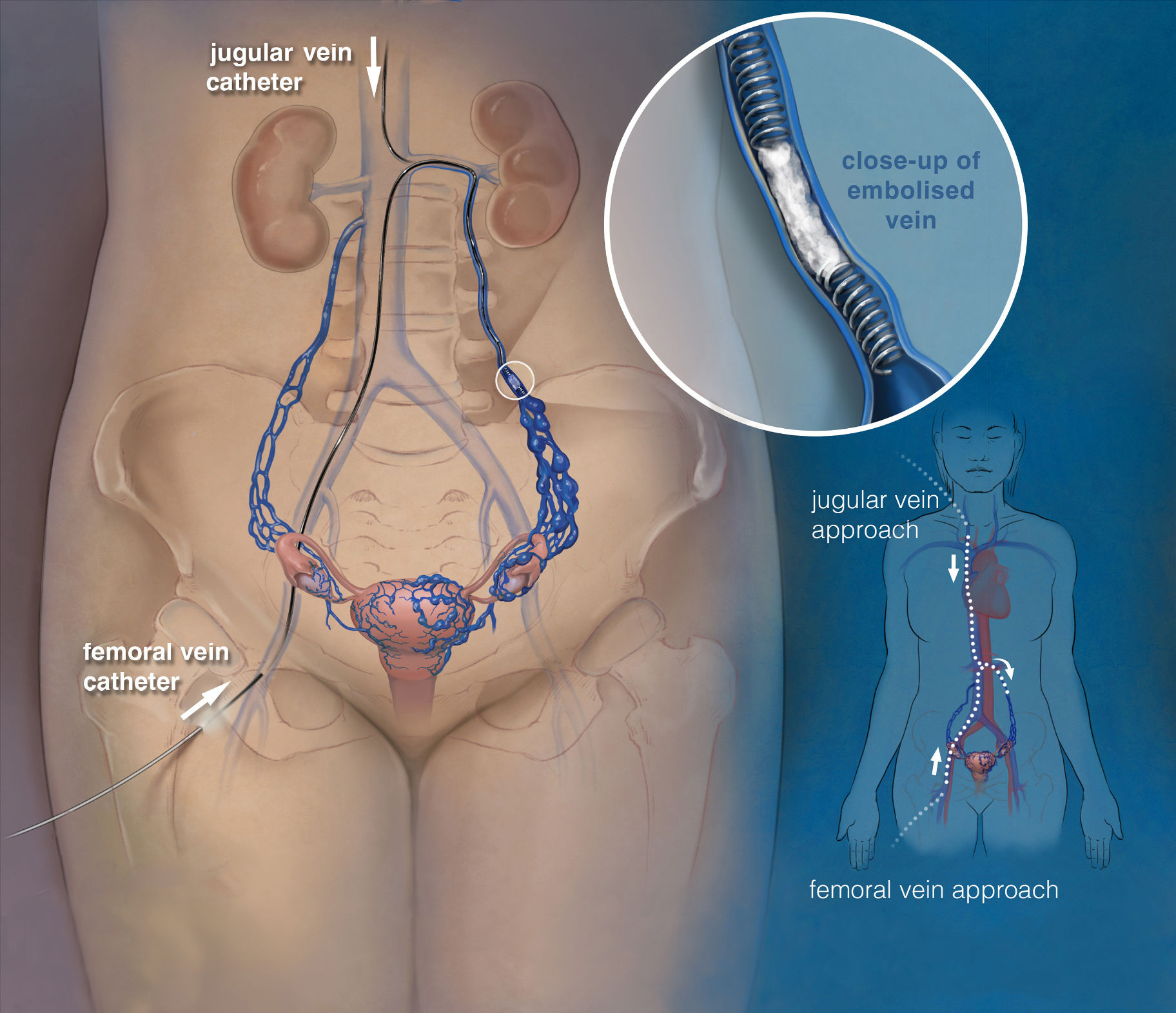
Ovarian Vein Embolisation

Ovarian vein embolisation is a non-surgical, image-guided interventional radiology procedure that addresses faulty varicose veins in the pelvis, particularly ovarian veins, which can contribute to pelvic congestion syndrome. During this interventional radiology procedure, a radiologist uses a small catheter to place a coil or other substance into the affected veins, blocking blood flow to the problem areas. This helps reduce pain and discomfort by preventing blood from pooling in the veins.
Pelvic congestion syndrome (PCS) can cause chronic pelvic pain due to enlarged varicose veins in the pelvic region. When traditional treatments fail to alleviate the discomfort, your doctor might refer you to an interventional radiologist for ovarian vein embolisation. This procedure is a safe and effective alternative to surgery, with minimal recovery time, allowing you to return to your daily activities quickly.
Embolization of Adenomyosis

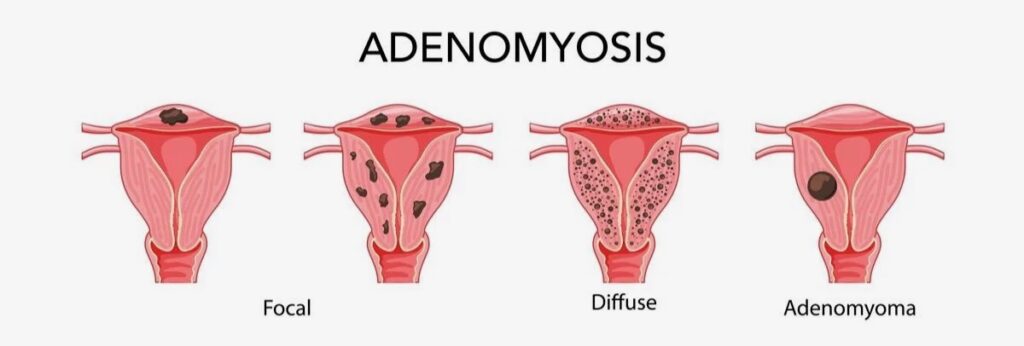
Embolization of adenomyosis is a non-surgical, image-guided interventional radiology procedure designed to treat adenomyosis by reducing blood flow to the affected areas of the uterus. During the procedure, a radiologist inserts a small catheter into the uterine arteries and gently releases tiny embolic particles that block the vessels supplying the adenomyotic tissue. With reduced blood flow, the abnormal tissue becomes less active, leading to significant relief of pain, heavy menstrual bleeding, and other symptoms.
Adenomyosis can cause chronic pelvic pain, severe menstrual cramps, and heavy periods that interfere with daily life. When medication or conventional treatments fail to bring improvement, your doctor may refer you to an interventional radiologist for adenomyosis embolization. This minimally invasive procedure offers a safe and effective alternative to major surgery such as hysterectomy, while preserving the uterus and supporting a faster recovery.
Recanalization of blocked fallopian tubes

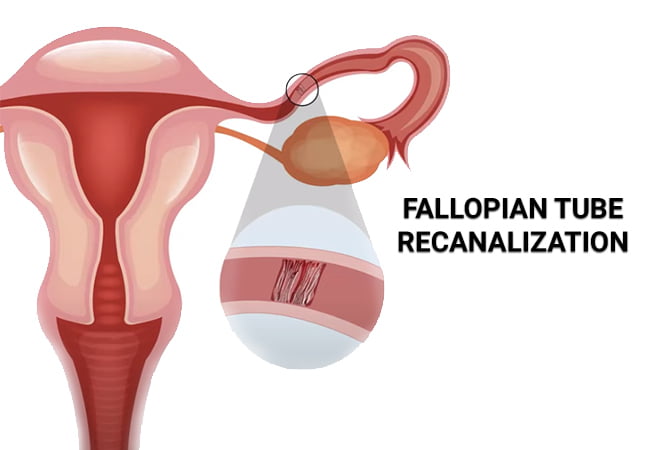
Fallopian tube recanalization is a minimally invasive, image-guided interventional radiology procedure used to open blocked fallopian tubes and improve fertility. During the procedure, a radiologist guides a thin catheter into the uterus under fluoroscopic imaging, then threads a smaller catheter through the opening of the fallopian tube to clear the blockage. This restores a natural passage for the egg and sperm, significantly improving the chances of natural conception.
Blocked fallopian tubes are a common cause of infertility and may result from inflammation, mucus plugs, or previous infections. When traditional fertility treatments are unsuccessful, your doctor may recommend fallopian tube recanalization. This technique avoids surgery, involves no incisions, and allows most women to return to normal activities the same day, making it an effective, low-risk, fertility-restoring option.
FAQ
1. Are these procedures non-surgical?
Yes. All four interventions; Uterine Fibroid Embolization (UFE), Ovarian Vein Embolisation, Adenomyosis Embolization, and Fallopian Tube Recanalization, are non-surgical, image-guided procedures performed by interventional radiologists.
2. How are the procedures performed?
They use ultrasound, CT, or fluoroscopic (X-ray) guidance to insert a thin catheter through a tiny skin puncture. Depending on the treatment, the radiologist either blocks abnormal blood vessels (embolization) or opens blocked fallopian tubes (recanalization).
3. Do these procedures require general anesthesia?
No. They are usually done with local anesthesia and mild sedation, meaning you remain comfortable and awake. General anesthesia is rarely needed.