Overview
Our Urology & Men’s Health Interventions offer advanced, minimally invasive, image-guided treatments for a wide range of prostate, kidney, and urinary conditions. Using ultrasound, CT, and fluoroscopic guidance, our interventional team provides precise, targeted procedures that help relieve symptoms, improve urinary function, and address conditions such as enlarged prostate, kidney obstruction, varicoceles, and urinary tract blockages.
These treatments are designed to reduce discomfort, shorten recovery time, and, whenever possible, help patients avoid major surgery. With a focus on accuracy, safety, and patient comfort, our minimally invasive techniques offer modern, effective solutions that support long-term urological health and overall well-being.
Advantages
- Relieves Urinary Symptoms Quickly: PAE effectively reduces frequent urination, urgency, and discomfort caused by an enlarged prostate.
- Improves Fertility and Testicular Health: Varicocele embolization reduces scrotal vein swelling, improving sperm quality and long-term fertility.
- Minimally Invasive, Avoids Surgery: Both procedures use small catheters and imaging guidance, avoiding open surgery and reducing recovery time.
- Rapid Return to Daily Life: Most patients can resume normal activities within 1–3 days.
- High Success and Safety: PAE achieves clinical improvement in 80–85% of cases, while varicocele embolization has near 100% technical success with low risk of complications.
- Symptom-Specific Relief: Each procedure targets the root cause—prostate enlargement or varicocele—offering precise, effective treatment rather than just symptom management.
Treatments
Prostate Artery Embolisation (PAE)
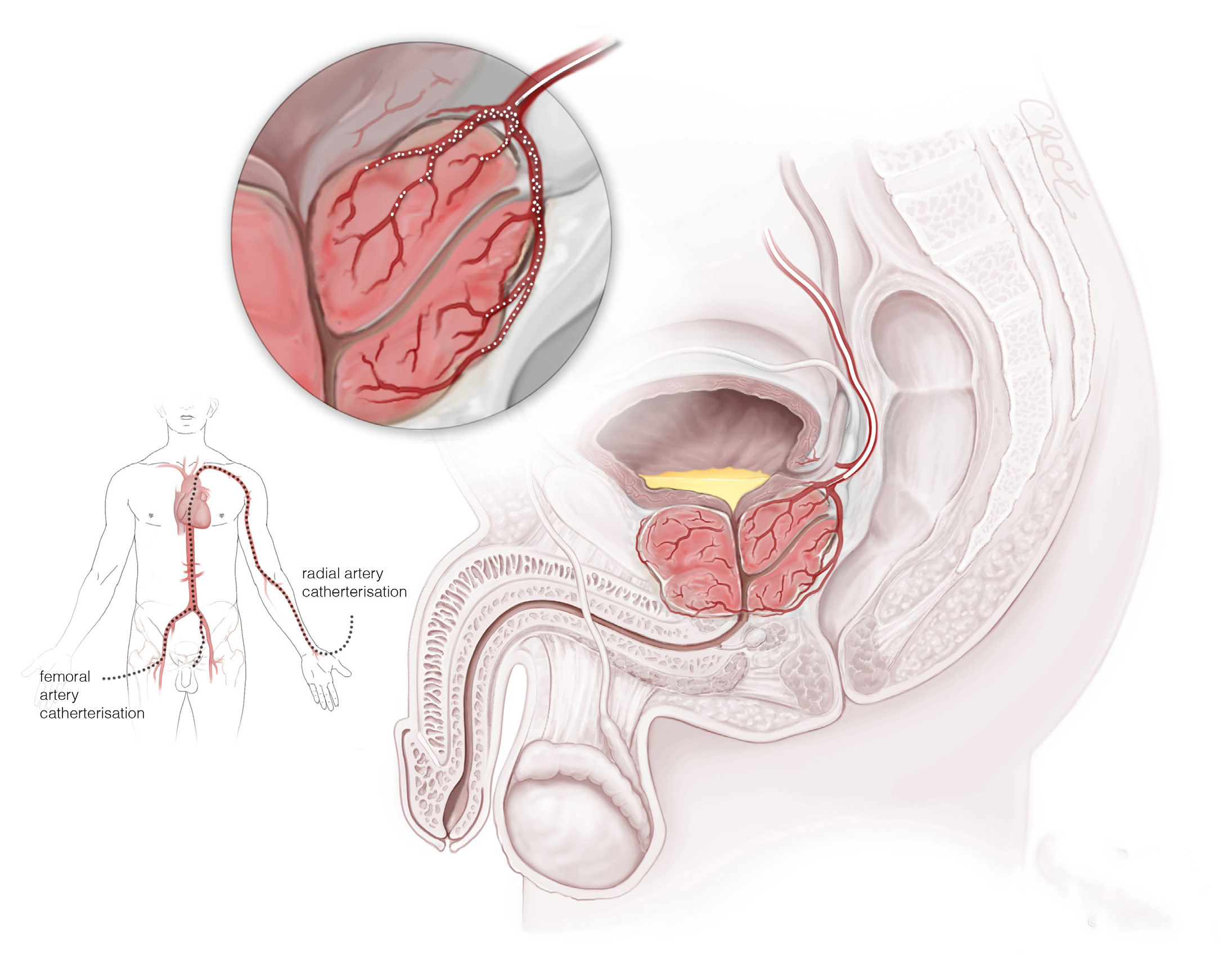
PAE is a minimally invasive interventional radiology procedure to treat an enlarged prostate. Under X-ray guidance, a micro-catheter—a very fine tube—is navigated to the arteries that supply the prostate. Tiny plastic beads are then injected to block blood vessels providing blood flow, gradually shrinking the prostate and relieving urinary symptoms caused by BPH. This procedure is an excellent alternative to surgery for many men, offering a shorter recovery time with fewer risks.
If you have been diagnosed with an enlarged prostate, or benign prostatic hyperplasia (BPH), and are experiencing symptoms such as frequent urination, urinary incontinence, weak urine stream, or incomplete bladder emptying, PAE may be recommended as a minimally invasive alternative to surgery. By reducing the prostate’s blood supply by embolising blood vessels, this treatment aims to relieve lower urinary tract symptoms without the need for major surgery, potentially delaying or eliminating the need for future surgical intervention.
Varicocele Embolisation

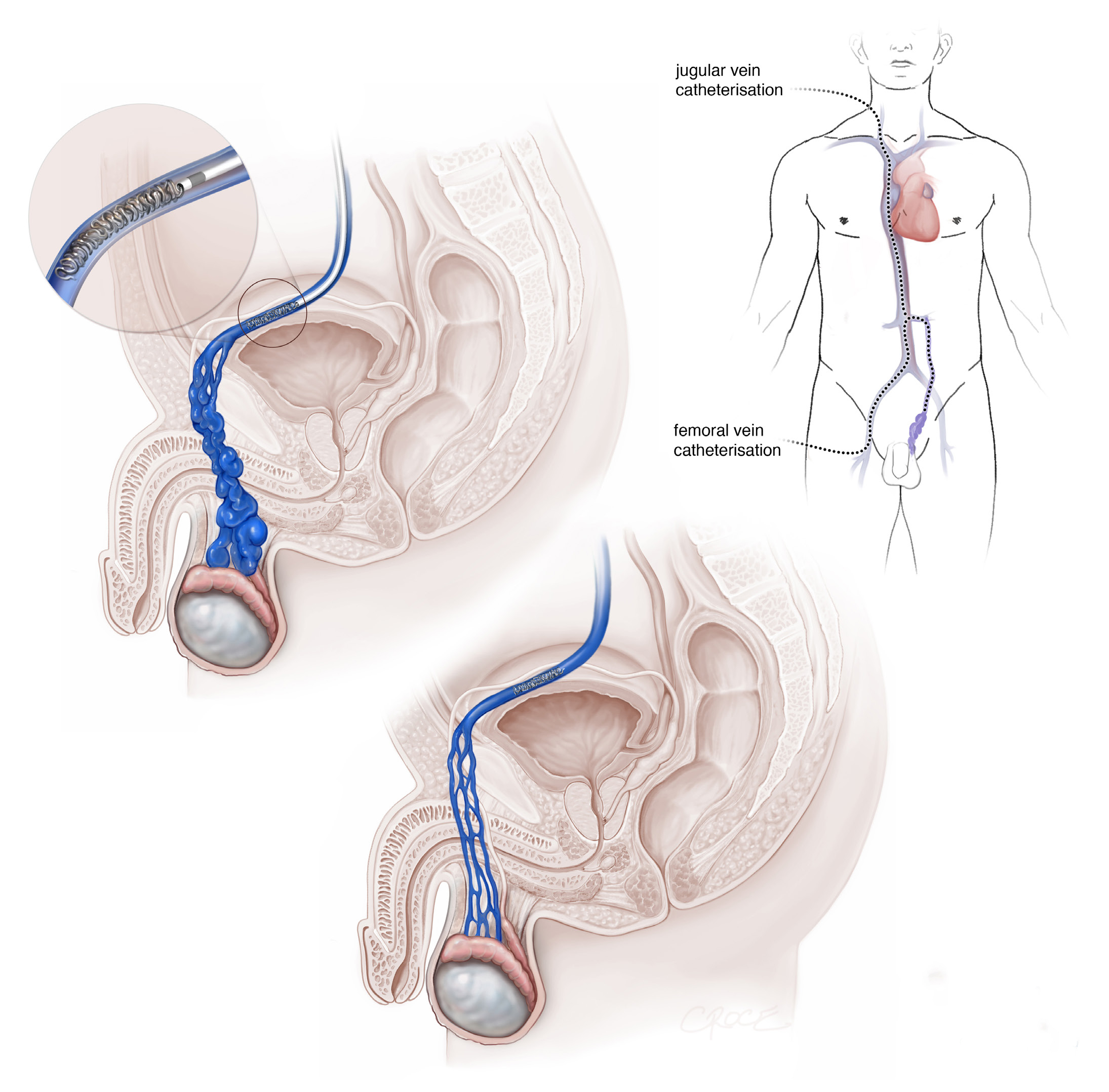
Varicocele embolisation is an image-guided, nonsurgical procedure where varicocele specialists use medical imaging guidance to treat varicoceles, which are enlarged veins in the scrotum with abnormal blood flow. The procedure involves using a catheter (a thin plastic tube) to place tiny coils or a liquid substance into the affected vein, diverting blood flow away from the varicocele. This helps to reduce blood pressure in the vein and alleviate symptoms. This minimally invasive treatment is performed by an interventional radiologist and offers a less invasive alternative to surgery, with similar effectiveness and a shorter recovery time.
Your doctor may refer you for varicocele embolisation if you have a varicocele causing symptoms like dull, aching pelvic pain, discomfort in the scrotum, pelvic organ congestion, or fertility issues. Varicoceles can also affect testicular development in adolescents.
The procedure is recommended as a minimally invasive treatment that is an effective and safe alternative to surgery for treating the enlarged vein. By diverting blood flow away from the varicocele, embolisation helps alleviate symptoms and improve fertility. It is particularly suitable for patients seeking a quick recovery and less risk of complications compared to traditional surgical options. Your doctor will assess your condition to determine if this treatment is appropriate.
Venous leak embolization for Erectile dysfunction
What is venous leak?
Venous leak is a disorder that affects erectile function in men. Lack of blood pressure in the veins responsible for erections makes it difficult or impossible to maintain a sufficiently firm erection.
Symptoms of venous leak include soft, short-lived erections that can lead to unsatisfactory sexual relations, in turn negatively impacting self-confidence and quality of life.
How is embolization used to treat venous leak?
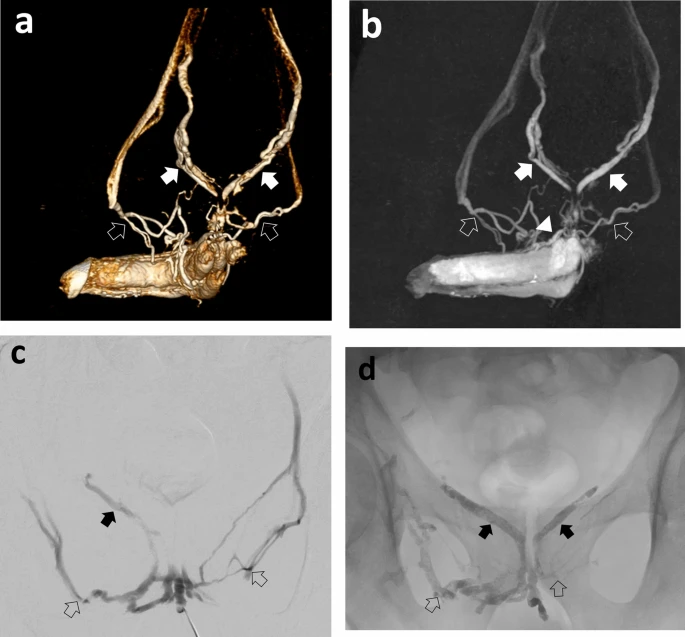
The venous leak embolization is a minimally invasive procedure to restore the blood pressure necessary for normal erections. It consists in selectively blocking certain veins in order to redirect blood flow to the corpora cavernosa in the penis, thus enabling a more satisfactory erection.
Benefits of Venous Leak Embolization:
- Minimally invasive: Compared to surgery, embolization requires only a small needle puncture and has a shorter recovery time.
- Effective: Studies have shown significant improvement in erectile function for many men after the procedure.
- Safe: Embolization is generally a safe procedure with a low risk of complications.
- Outpatient procedure: Patients can go home the same day as the procedure.
Who is a Candidate for Venous Leak Embolization?
Venous leak embolization may be an option for men who:
- Have ED caused by venous leak.
- Have not responded well to other treatments.
- Are in good overall health.
What to Expect During the Procedure:
- Local anesthesia: The area where the catheter is inserted will be numbed.
- Mild to Moderate sedation: You may be given medication to help you relax.
- Real-time imaging: The interventional radiologist will use real time X-Ray imaging guidance to find the culprit vein, position the catheter and inject the embolic agents.
- Monitoring: You will be monitored for a short time after the procedure.
FAQ
1. Are these procedures non-surgical?
Yes. All three treatments are non-surgical, image-guided procedures performed through tiny skin punctures, avoiding traditional open surgery.
2. Do these procedures require general anesthesia?
No. They are performed with local anesthesia and mild sedation, keeping you comfortable while avoiding the risks of general anesthesia.
3. How long do the procedures take?
Most procedures take 30–90 minutes, depending on the condition being treated.